

Happy New Year !! 😀 , 2020 is right on the floor and its interesting to set some challenging goals to achieve and cherish. However, there are languages like Python and Javascript having their stakes high in 2020. The importance and relevance of these languages keep climbing up as their applications are from Machine Learning to Web Development, Automation to Data Science and each of these applications is broad and keep evolving. Also, to be a wholesome ; it becomes beneficial to set smart and strategic goals that would help you in reaping from the programming tools. Here are some things you can do in 2020.

Keep Growing Your Programming Skills
Growing is the key to evolve and be better. Always learn new patterns and new techniques, build logics and learn more on how to program ? what techniques can be used ? Try to master the new skills, you can learn more about Software Design Patterns this year. Here is a list of some interesting and profitable activities you can do to enhance your skills this year !
- Start reading documentation of Standard Libraries of a Language you love this will help you get through the advances in that language.
- Build a project and manage it, this would help you learn better development and maintenance skills.
- Check if there is anything on the “4 Most Important Things to be a Successful Programmer” that you don’t know and explore more tech articles.
- Enjoy Coding and avoid stressing !!
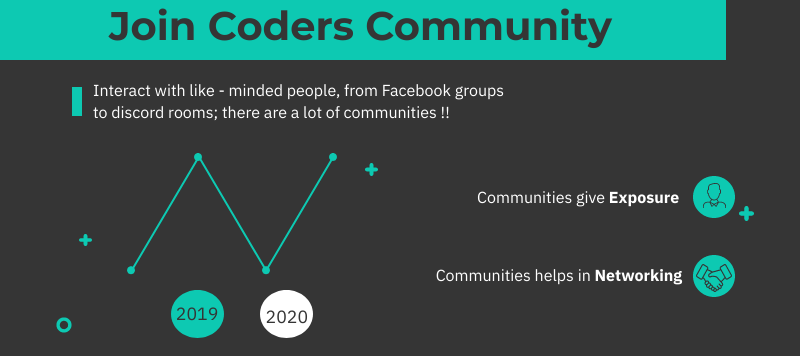
Join a Coders Community This 2020
Community is a great asset. Coders in a community will help you a lot and will make you learn more. You can contribute to community, you can get answers on confusing concepts and also help people in community. There are various communities, you can be a part of in your country or you can join online communities too. Community developers help in opening new doors, learning inside – development skills and hacks and also open collaborative opportunities for you.
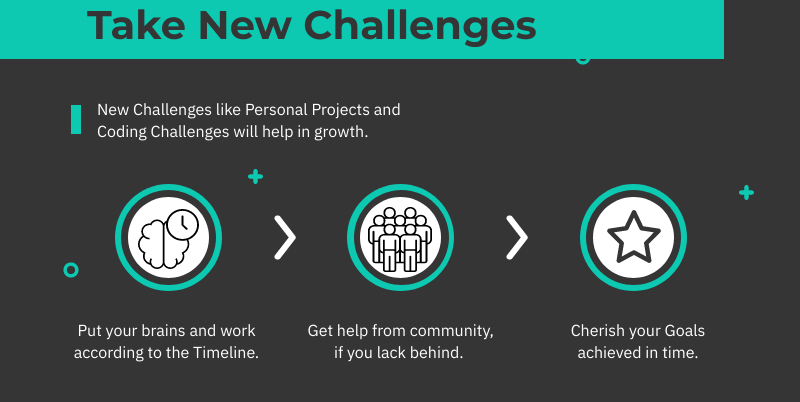
Take New Challenges
Learning begins with challenges. Take some personal projects and set a timeline this 2020, stick to the timeline and juggle with the challenges. More flexible you will become, more growth will tend to occur. If you have a community, ask for help if you lack behind.
Monitor your growth and this 2020; you will be a better programmer and developer. You will emerge better and stronger on the other side of the Challenge.
Attend Tech Events and Read Books
Attend meet-ups and events related to your tech interest. This will give you first; Exposure, it will help you know more about what’s happening in Tech Industry and second; Networking, it will introduce you to Developers, Coders and even CEOs of different tech companies, you can exchange contacts and need not to explain what these connections can do for you.
OK ! I know you would be thinking, Why books in this digital age ? Let me clear this, Books are the best source to learn even in this era. Books are a good guide to learn step – by – step process of implementation in coding. Even after learning shortcuts online, we need to have strong conceptual basics that could be achieved by books itself. Books are easily reachable and provide the know-hows behind each process. Don’t see this as a boring routine; see it as a learning process to get better in 2020. Here are some suggestions from my side :
My 2020 book list :
- Automate the Boring Stuff with Python, 2nd Edition: Practical Programming for Total Beginners
- Life 3.0: Being Human in the Age of Artificial Intelligence
- The Four: The Hidden DNA of Amazon, Apple, Facebook and Google
- Python Crash Course, 2nd Edition: A Hands-On, Project-Based Introduction to Programming
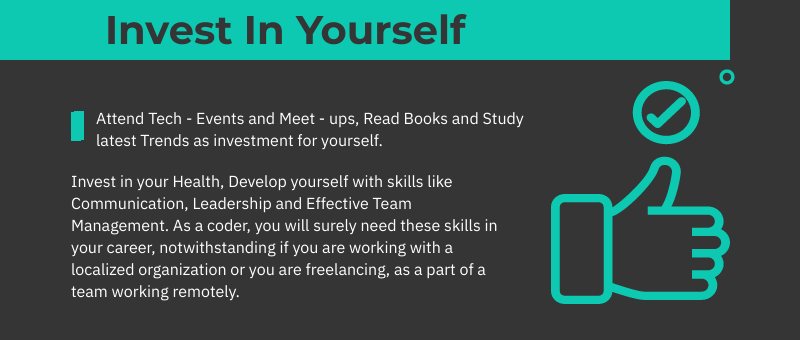
Be a Trend – Seeker
Every Technology evolves. You must have heard about newer versions coming out. Latest versions have new features to catch up with the trends. Developers should learn and read about these trends. Learning trends lets you know what is upcoming in Industry and what are the upcoming events. Knowing the trends early will drive you to a good position with respect to the Tech Industry.
Achieving each of these things may seem as overwhelming and difficult, but if you decide, have a mindset to achieve and strategize time for it, no goal is unachievable. Set out the clear goals; It is a strategy for your growth. And you know what ? Set realistic goals – ones that you can imagine to be executable. A weekly or monthly challenge for yourself is something you can do. See your goal process as a milestone that can be attained in parts. That way, it won’t appear cumbersome to you. Also, Best of luck for completing your goals in 2020 !
Thank you for being here !! 😀 If you found this content useful and would love to have more blog posts like these, help me by any of the ways given below :
- Like Us
- Follow Us
- Comment down your thoughts
- Share this on Social Media Platforms
If you have some suggestions or didn’t find what you were expecting, feel free to contact us via Contact Page. I am waiting for all your likes, comments and suggestions. 😀
Till then Happy 2020 and Happy Coding !! 😛
 Dare to Learn